National Lead Poisoning Prevention Week | October 25–31, 2026
By Panda Water Systems
Protecting your family starts with understanding your home’s water—and choosing practical steps based on reliable information.
National Lead Poisoning Prevention Week is an opportunity for Western New York homeowners to learn about potential lead exposure, review their plumbing, and explore testing and treatment options. This year’s theme is “Keep Kids Safe From Lead.” US EPA
How does lead get into drinking water?
Lead can enter water when lead-containing service lines, solder, faucets, or other plumbing materials corrode. Older homes deserve particular attention, but a home’s age alone cannot establish whether lead is present.
Because plumbing can introduce lead after water leaves the treatment plant, your utility’s water-quality report does not replace testing at your own tap. Learn more through the EPA’s guide to lead in drinking water. US EPA
Why prevention matters
The CDC reports that no safe blood lead level in children has been identified. Even low levels can affect learning and attention.
Water is only one potential source. Lead-based paint, household dust, soil, and certain products can also contribute to exposure. Reducing lead in drinking water should be part of a broader prevention plan. If you have concerns about your child’s exposure, speak with their healthcare provider about blood lead testing. CDC
Practical steps to reduce exposure through water
- Identify your service line. Ask your water utility about its records and use EPA’s Protect Your Tap guide.
- Arrange appropriate testing. Follow a qualified laboratory’s sampling instructions. A hardness, chlorine, or total dissolved solids reading does not establish whether lead is present.
- Use cold water for drinking and cooking. This includes preparing infant formula. Boiling does not remove lead.
- Follow local flushing guidance. Your utility can advise how to flush plumbing after water has been sitting.
- Clean faucet aerators and maintain filters. Follow the manufacturer’s replacement schedule and operating instructions. US EPA
Choosing filtration for lead reduction
A filter should match the contaminant you want to address. For lead, look for an independently certified lead-reduction claim for the exact system and replacement cartridge.
Reverse osmosis is one treatment option. NSF’s Contaminant Reduction Claims Guide also identifies other filter categories with certified lead-reduction options. Certification and performance claims should be checked at the individual product level. NSF
Meet the Kenai FreshStream+ Tankless RO
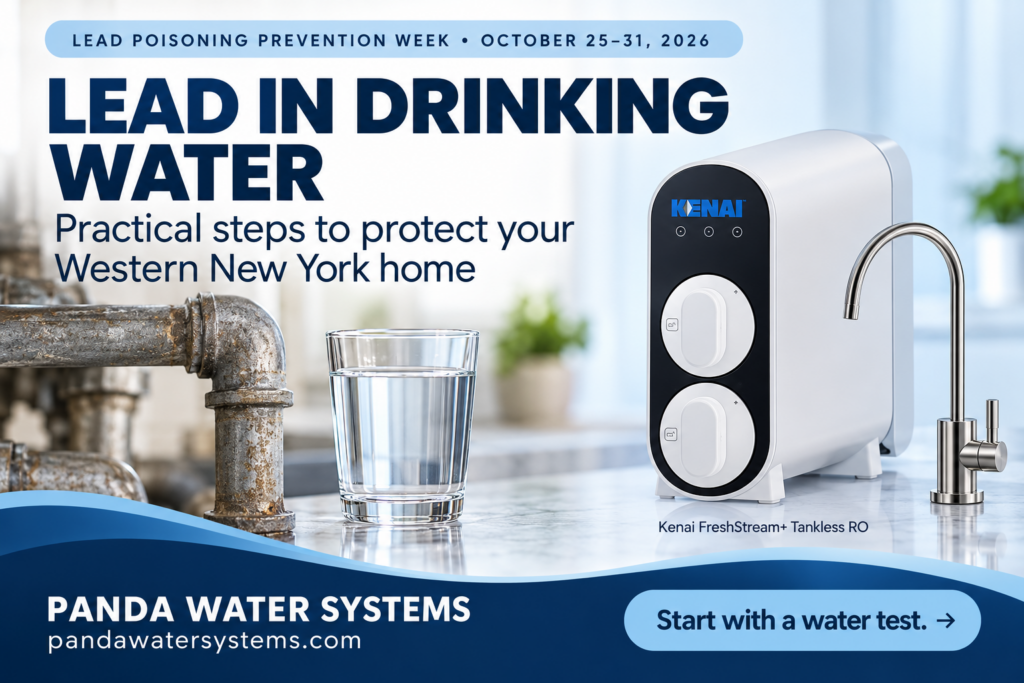
For homeowners exploring an updated under-sink drinking-water system, Panda Water Systems offers the Kenai FreshStream+ Tankless Reverse Osmosis system, featured in the accompanying graphic.
Its compact design eliminates the separate storage tank used by traditional RO systems. According to the manufacturer’s brochure, features include:
- A slim profile that helps preserve cabinet space.
- A dedicated drinking-water faucet with indicator lighting.
- Filter-life reminders and accessible replacement cartridges.
- A built-in leak sensor.
- A rated production capacity of 600 gallons per day under specified conditions; actual output depends on installation and water conditions.
The right recommendation begins with your water results, installation requirements, and the system’s documented treatment capabilities. For a lead-specific concern, confirm the exact model’s lead-reduction documentation before selecting treatment.
Explore our water-treatment products or ask us specifically about the FreshStream+ Tankless RO.
Start with information about your home
A thoughtful prevention plan combines testing, appropriate treatment, regular maintenance, and addressing lead-containing plumbing where identified.
Serving Niagara and Erie Counties, Panda Water Systems can help you understand testing options and discuss filtration suited to your household.
Contact Panda Water Systems to discuss your water concerns and the FreshStream+ Tankless RO.
Basic in-home water screening is different from laboratory lead analysis. Ask which tests are included and whether additional laboratory fees apply.
References